Bringing home a puppy? Learn what to expect in the first 30 days—from settling in and toilet training to vaccination, socialization, biting and building a healthy routine.
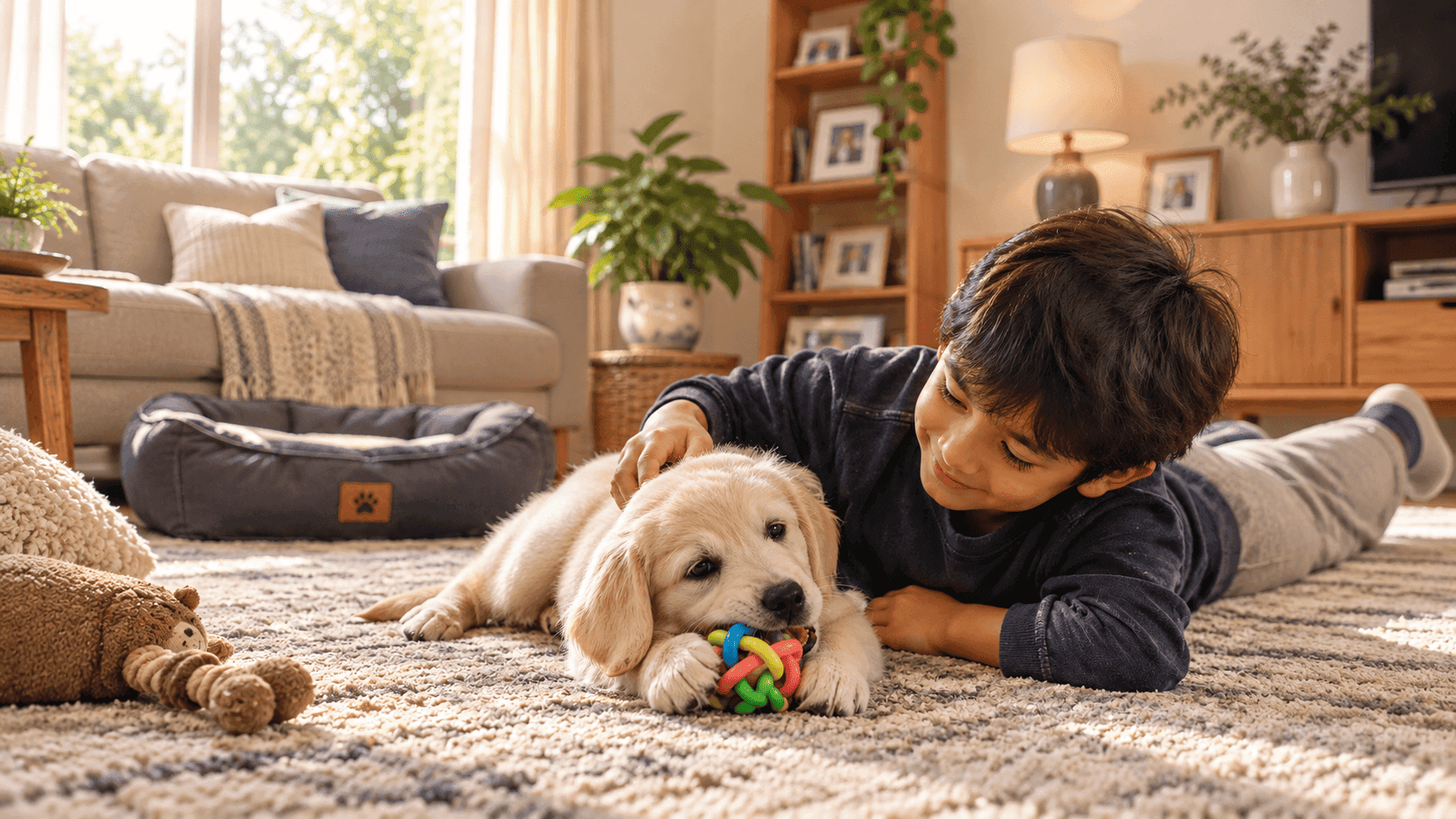
Bringing home a puppy is exciting. But once the excitement settles, the questions usually begin.
Why are they crying at night? Why did they pee inside again? Is all that biting normal? When should vaccinations be done? And when can they safely start exploring outside?
The first month is an adjustment period for both of you. Your puppy is learning about a completely new home, new people, new sounds and a new routine.
You don't need to get everything right immediately.
The goal of these first 30 days is simple: help your puppy feel safe, build a healthy routine and give them a good start.
Before Home → Prepare
Make the home safe and get the essentials ready.
First Few Days → Settle
Focus on food, sleep, toilet breaks and helping your puppy feel secure.
Week 1 → Routine + Health
Build a predictable routine and review vaccination and health records.
Week 2 → Training + Handling
Start simple training and teach your puppy how everyday life works.
Weeks 3–4 → Socialization + Good Habits
Introduce the world gradually while continuing safe routines.
By Day 30 → Review Progress
Check what's going well and what still needs work.
You don't need to buy everything at once.
Start with the basics:
Appropriate puppy food
Food and water bowls
Comfortable bed or sleeping area
Safe puppy toys and chews
Collar or harness
Leash
Cleaning supplies for toilet accidents
If possible, ask what food your puppy is currently eating before bringing them home. Moving to a new house is already a major change, so there is usually no need to suddenly change an appropriate diet at the same time.
If you later decide to switch foods, make the transition gradually unless your veterinarian recommends otherwise.
Puppies explore with their noses and mouths, which means almost anything within reach can become interesting.
Keep electrical wires, medicines, cleaning chemicals, pesticides, rubbish, sharp objects, unsafe foods and small objects they could swallow out of reach.
For many homes in Nepal, also check balconies, rooftops, open staircases, gates and doors where a curious puppy could fall or escape.
A little preparation now can prevent a much bigger problem later.
Your puppy has just entered a completely unfamiliar world.
Some puppies immediately start exploring.
Others may hide, follow you everywhere, cry when left alone or seem unusually quiet.
You may also notice:
crying at night
toilet accidents
lots of sleeping
sudden bursts of energy
chewing and mouthing
changes in appetite
wanting constant attention
Give your puppy time.
Keep the first few days relatively calm and introduce new people, rooms and experiences gradually.
Food + Water + Sleep + Toilet + Safety + Trust
That's enough for the first few days.
Night-time crying is common when a puppy first arrives.
They may have recently been sleeping near their mother or littermates and are suddenly expected to sleep somewhere completely unfamiliar.
Keep their sleeping area comfortable and reassuring. Young puppies may also wake because they need a toilet break.
If you're using a crate, introduce it as a comfortable, positive place rather than somewhere the puppy is sent as punishment.
Your puppy is gradually learning:
“This is my home. I'm safe here.”
Once your puppy starts settling in, begin making everyday life more predictable.
A simple routine might look like:
Wake → Toilet → Food → Play → Rest
You don't need to follow an exact minute-by-minute schedule.
Consistency matters more.
Your puppy isn't born knowing where you want them to go.
Give them regular toilet opportunities, especially:
after waking
after meals
after active play
before bedtime
when you notice sniffing or searching for a spot
When your puppy toilets in the right place, reward them.
When an accident happens indoors, clean it properly and continue the routine.
Punishing an accident doesn't clearly teach your puppy where they should have gone instead.
Even if your puppy looks healthy, an early veterinary visit is useful, particularly when their previous health history isn't clear.
Take any records you received with your puppy.
Try to confirm:
approximate age or date of birth
previous vaccinations
previous deworming or parasite treatment
previous illnesses
current medications, if any
current food
If someone tells you “vaccination bhaisakyo,” ask for the vaccination record whenever one is available.
Your veterinarian can review what your puppy has actually received and help plan what comes next.
One vaccine does not necessarily mean a puppy has completed their initial vaccination series.
Puppy vaccination generally involves a series, and the appropriate schedule depends on factors such as age, previous vaccination history, vaccine product and individual circumstances.
Rabies prevention also deserves particular attention in Nepal. Nepal's Epidemiology and Disease Control Division publishes national rabies guidance as part of the country's rabies-control efforts.
Instead of copying another puppy's vaccination schedule, take your puppy's records to a veterinarian and establish the appropriate plan for them.
Your puppy doesn't need to learn ten commands this week.
Start with the things that make everyday life easier.
Teach them gradually that:
Their name → means pay attention
Coming to you → leads to something positive
Their toy → is okay to chew
Gentle handling → isn't scary
Their bed or crate → is a safe place
You can also gradually introduce wearing a collar or harness, gentle brushing and having their paws and ears handled.
Keep training short and positive.
Reward behaviours you want your puppy to repeat.
You're building communication before you're building obedience.
Your hands.
Your slippers.
Your clothes.
Your furniture.
Sometimes even things you didn't know they could reach.
Puppies naturally explore their surroundings with their mouths, and chewing can become particularly noticeable during puppyhood.
Instead of expecting your puppy not to chew anything, teach them what they can chew safely.
Keep appropriate puppy-safe toys available and redirect them when they start chewing something they shouldn't.
Avoid turning hand-biting into a game if you don't want the behaviour encouraged.
If biting appears strongly connected with fear, guarding or concerning aggression rather than normal puppy play, discuss it with a veterinarian or appropriately qualified behaviour professional.
Socialization is one of the most important parts of early puppyhood.
But socialization doesn't simply mean:
“Let my puppy meet lots of dogs.”
It means helping your puppy develop positive experiences with the world they will live in.
Depending on your puppy and environment, that can include:
different people
household noises
traffic sounds
motorcycles and vehicles
different safe surfaces
collars and harnesses
grooming
gentle handling
travelling safely in a vehicle
calm, appropriate dogs
unfamiliar environments
For puppies living in busy areas of Kathmandu and other Nepali cities, everyday sounds such as traffic, motorcycles, horns, people and street activity can also be introduced gradually rather than all at once.
Don't force your puppy toward something they're frightened of.
Give them space and introduce new experiences gradually and positively.
This is where many new puppy parents become confused.
Early socialization matters.
So does protection from infectious disease.
The answer isn't to expose an incompletely vaccinated puppy to every dog and every environment.
But complete isolation during an important developmental period isn't ideal either.
The better approach is controlled, positive exposure while managing disease risk.
For example, depending on veterinary advice and local risk, your puppy may be able to observe people, traffic, sounds and new environments without automatically walking through areas heavily used by unknown dogs.
Avoid unnecessary contact with sick animals and animals of unknown health or vaccination status.
Ask your veterinarian what level of outdoor exposure is appropriate based on your puppy's age, vaccination history and local disease risk.
After a month together, your puppy doesn't need to be perfectly trained.
Instead, ask whether you're building the right foundation.
☐ Your puppy is becoming comfortable at home
☐ Their daily routine is becoming more predictable
☐ Toilet training is progressing
☐ They have a safe place to sleep
☐ Basic positive training has started
☐ They have appropriate things to chew
☐ Safe socialization has begun
☐ Your home is properly puppy-proofed
☐ You know their vaccination history
☐ You have discussed parasite prevention
☐ You know when their next vaccination or health visit is due
There may still be toilet accidents.
Your puppy may still bite your hands.
They may still wake you up.
They will definitely still have things to learn.
That's normal.
Thirty days isn't the finish line.
It's the foundation you're going to keep building on.
Crying, chewing, toilet accidents and bursts of energy can all be part of puppyhood.
Signs of illness are different.
Contact a veterinarian promptly if your puppy develops concerning signs such as:
repeated vomiting
persistent or severe diarrhoea
blood in vomit or stool
refusing food together with other signs of illness
marked weakness or unusual lethargy
difficulty breathing
collapse
seizures
significant abdominal swelling or pain
suspected poisoning
swallowing a foreign object
serious injury
Young puppies can become unwell quickly.
If your puppy appears significantly sick, don't wait for an online guide to diagnose the problem.
Contact a veterinarian.
Don't guess which vaccines have already been given. Arrange a veterinary assessment and provide whatever history you have. A veterinarian can determine an appropriate vaccination plan based on your puppy's age, health and available records.
One vaccination does not necessarily mean your puppy has completed their initial vaccination series. Safe early socialization is still important, so ask your veterinarian how to balance positive exposure with disease risk based on your puppy's vaccination status.
Mouthing and playful biting are common during puppyhood. Give your puppy appropriate things to chew and redirect biting toward toys. Seek professional advice if biting appears strongly associated with fear, guarding or aggression.
Not automatically. If your puppy is already eating an appropriate puppy food and doing well on it, keeping some consistency during the initial adjustment can help. If you decide to change foods, transition gradually unless your veterinarian advises otherwise.
You don't need a perfectly trained puppy after 30 days.
You need a puppy who is beginning to feel safe, learning how life in your home works and receiving appropriate preventive healthcare.
Keep it simple:
Good food. Safe experiences. Positive training. Preventive care. Plenty of rest.
And plenty of patience.
The small routines you build now can become the foundation for many happy years together.
BunoPets helps pet parents find puppy stater package ,puppy food, everyday dog essentials and practical pet-care guidance.
For pet parents in Kathmandu Valley, BunoPets also offers eligible home pet-health services, including vaccination and preventive care.
World Small Animal Veterinary Association (WSAVA) — 2024 Guidelines for the Vaccination of Dogs and Cats
Epidemiology and Disease Control Division, Government of Nepal — National Guidelines for Rabies Prophylaxis and Management in Nepal
American Animal Hospital Association (AAHA) — New Puppy and New Dog Care Guidance
Merck Veterinary Manual — Puppy Care and Household Hazard Guidance
