Learn when puppies usually start vaccination, why booster doses are needed, when rabies vaccination may be due, and what new dog parents in Nepal should know.
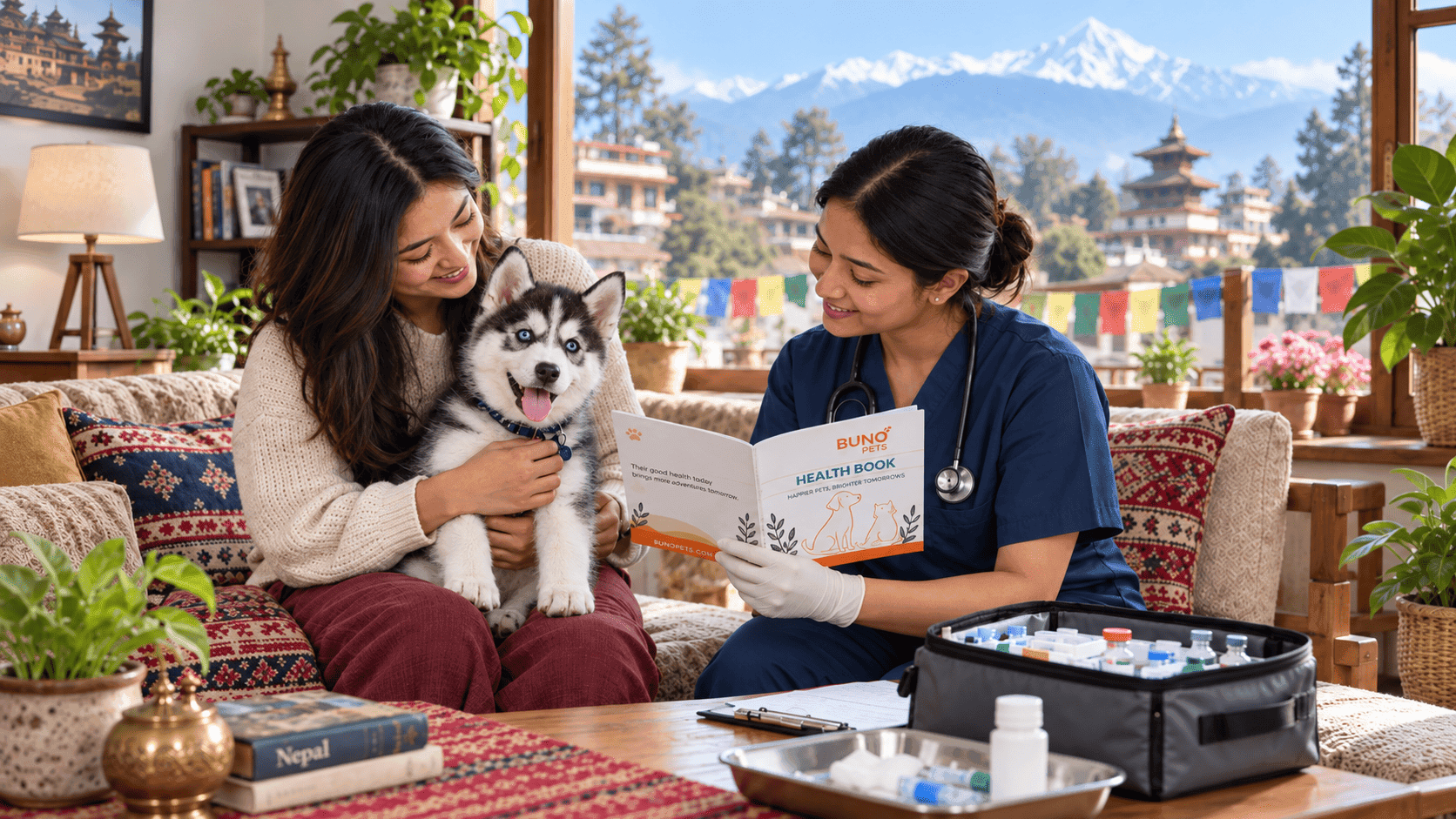
One of the first health questions new puppy parents ask is:
“When should my puppy get vaccinated?”
For most puppies, the main vaccination series starts at around 6–8 weeks of age and continues every few weeks until at least 16 weeks old.
The exact schedule can vary depending on your puppy’s age, health, previous vaccination history, disease risk and the vaccine product being used.
6–8 weeks
Start the main puppy combination vaccine
9–12 weeks
Booster dose
12–16 weeks
Continue boosters; rabies vaccination may also be due
16 weeks or older
Make sure an appropriate core vaccine dose has been given at or after this age
Later
Future boosters depend on the vaccine, previous records and veterinary recommendation
In Nepal, puppy vaccination plans commonly include vaccines such as:
DHPPiL combination vaccines may protect against:
canine distemper
canine hepatitis
canine parvovirus
canine parainfluenza
leptospirosis
The exact components depend on the vaccine product being used, so always check the vaccine label or vaccination record.
Rabies vaccination is especially important in Nepal because rabies remains endemic.
Dog vaccination is an important part of rabies prevention and should be included in your puppy’s preventive-care plan.
Canine coronavirus vaccine is also used in some vaccination programmes in Nepal.
However, current international guidelines do not recommend routine canine enteric coronavirus vaccination for every pet dog, so whether it is included should depend on the product being used, local practice and the individual puppy’s vaccination plan.
Usually, no.
One injection normally does not complete the puppy vaccination series.
If a breeder or previous owner says your puppy was vaccinated, ask for the vaccination record and check:
which vaccine was given
when it was given
how old your puppy was
when the next dose is due
Young puppies receive antibodies from their mother.
These antibodies help protect them early in life, but they can also interfere with vaccination.
Because maternal antibodies disappear at different times in different puppies, repeat vaccination helps reduce the chance that a puppy remains unprotected.
This is why the main puppy vaccine series continues until at least 16 weeks of age.
Rabies vaccination is particularly important in Nepal.
Many rabies vaccines can be given from around 12 weeks of age, but the exact minimum age and booster schedule should follow the vaccine product being used and veterinary guidance.
Always keep the rabies vaccination record safely.
Do not treat one vaccine as complete protection.
While your puppy is still completing the vaccine series, avoid unnecessary high-risk exposure such as:
areas heavily used by unknown dogs
places contaminated with dog faeces
contact with sick dogs
close contact with dogs whose vaccination status is unknown
Safe socialisation is still important, so ask your veterinary professional how to balance socialisation with disease risk.
A missed date does not automatically mean the whole vaccination series needs to restart.
Take the vaccination record with you.
The next step depends on your puppy’s age, which vaccines were already given and how long the booster has been delayed.
The goal is to create the correct catch-up plan.
If there is no reliable vaccination card, do not assume your puppy is protected.
Tell the veterinary professional that the vaccination history is unknown so an appropriate plan can be made.
No.
An older puppy or adult dog can still begin an appropriate vaccination programme.
The schedule may be different from that used for a young puppy, so it should be planned according to the dog’s current age and history.
Tell the veterinary professional if your puppy currently has:
vomiting
diarrhoea
poor appetite
fever
unusual weakness
another significant illness
Your puppy’s health should be assessed before routine vaccination.
Keep these things ready:
vaccination card, if available
previous vaccine dates
your puppy’s age
current body weight, if known
information about any recent illness
details of any previous vaccine reaction
If your puppy is unwell on the day of vaccination, tell the veterinary professional before the vaccine is given.
Yes. Vaccine reactions can happen, although serious reactions are uncommon.
After vaccination, some puppies may temporarily have:
mild soreness at the injection site
lower activity than usual
mild tiredness
reduced appetite
These mild signs usually settle.
However, seek prompt veterinary attention if your puppy develops:
difficulty breathing
collapse
significant facial swelling
repeated vomiting
a severe or rapidly worsening reaction
If you are unsure whether a reaction is normal, contact the veterinary provider who administered the vaccine.
Let your puppy rest and avoid unusually strenuous activity for the rest of the day.
Keep an eye on:
appetite
activity
the injection site
swelling
vomiting
breathing
If anything seems unusual or is getting worse, contact your veterinary provider.
Always keep your puppy’s vaccination card.
Before leaving, make sure you know:
What vaccine was given today?
When is the next dose due?
Has rabies vaccination been given or scheduled?
Take a photo of the vaccination card as a backup.
You do not need to memorise every vaccine name.
Remember:
Start vaccination at around 6–8 weeks.
Continue the main puppy vaccine series until at least 16 weeks.
Include rabies vaccination in your puppy’s preventive-care plan in Nepal.
Keep the vaccination card and follow the next due date.
And most importantly:
One vaccine usually does not mean your puppy’s vaccination course is complete.
You do not need to guess from the vaccine card yourself.
Share your puppy’s age, previous vaccination record and last vaccine date with BunoPets.
We can help you understand what has already been given, what may be due next, and whether a home vaccination appointment is appropriate.
CTA: Review My Puppy’s Vaccination Record
World Small Animal Veterinary Association (WSAVA) — 2024 Guidelines for the Vaccination of Dogs and Cats
World Health Organization — Nepal — Rabies information and Nepal rabies context
WHO Country Office for Nepal — Nepal rabies-elimination and dog-vaccination initiatives
BunoPets Vaccination Service — Current vaccination options used in the BunoPets service context
Important: This article provides general preventive-care information. Your puppy’s exact vaccination plan may vary according to age, health, previous vaccination history, exposure risk and the vaccine product being used.
